
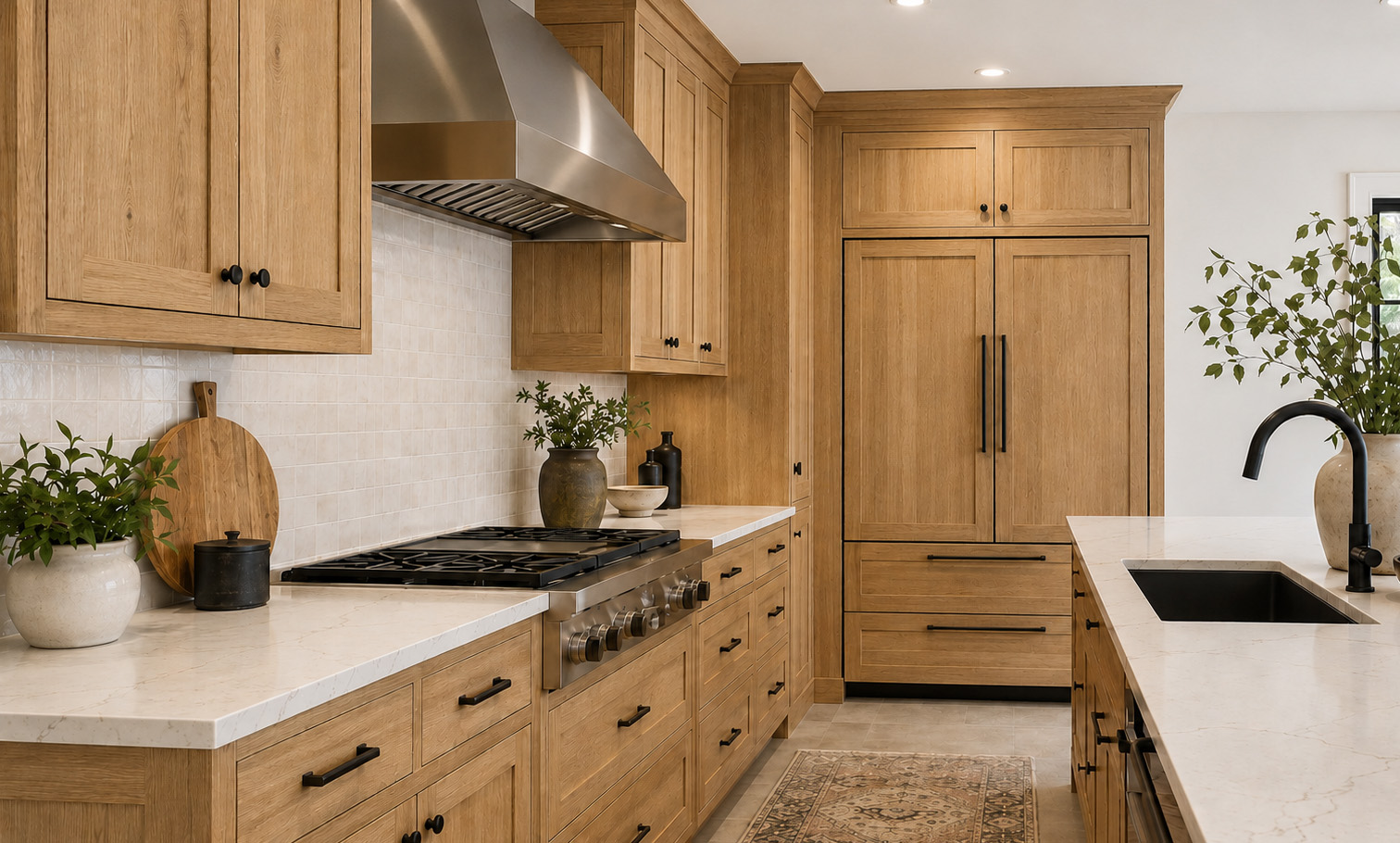
White Oak Is Not Laminate: Understanding the Beauty, Variation, and Reality of Real Wood
White oak is one of the most beautiful woods used in cabinetry today. It is also one of the most misunderstood.
In the last several years, white oak — especially rift white oak — has become extremely popular in kitchens, built-ins, vanities, and high-end remodeling projects. Designers love it. Homeowners ask for it by name. Remodelers are seeing more and more projects where “natural white oak” is the look everyone wants.
But there is a problem. A lot of people are not actually picturing real white oak. They are picturing laminate.
They are picturing a sample board, a printed panel, a catalog image, a Pinterest photo, or a rendering where every piece looks calm, straight, even, creamy, and perfectly coordinated. They are picturing what the laminate industry has trained the market to expect: repeated grain, controlled tone, predictable color, and a perfectly “selected” version of nature.
Then real wood shows up.
And real white oak does what real white oak does – it varies.
That is not a defect. That is the product.
Laminate Is Designed to Be Predictable. Wood Is Designed by God.
Laminate, melamine, thermofoil, and printed wood-look surfaces can be very useful products. They have their place. They are often durable, affordable, and consistent. But they are not wood.
A laminate white oak panel is usually designed from a selected image or pattern. The manufacturer can control the color, reduce the contrast, repeat the grain, and remove the natural surprises. The goal is consistency.
Real white oak is different.
Every tree is different. Every log is different. Every board is different. Even within one board, color and grain can change from one end to the other. The way the log is cut, where the board came from in the tree, how the tree grew, the mineral content, the pore structure, the ray fleck, and the finishing process all affect the final appearance.
Laminate gives you a picture of wood. Real wood gives you the tree.
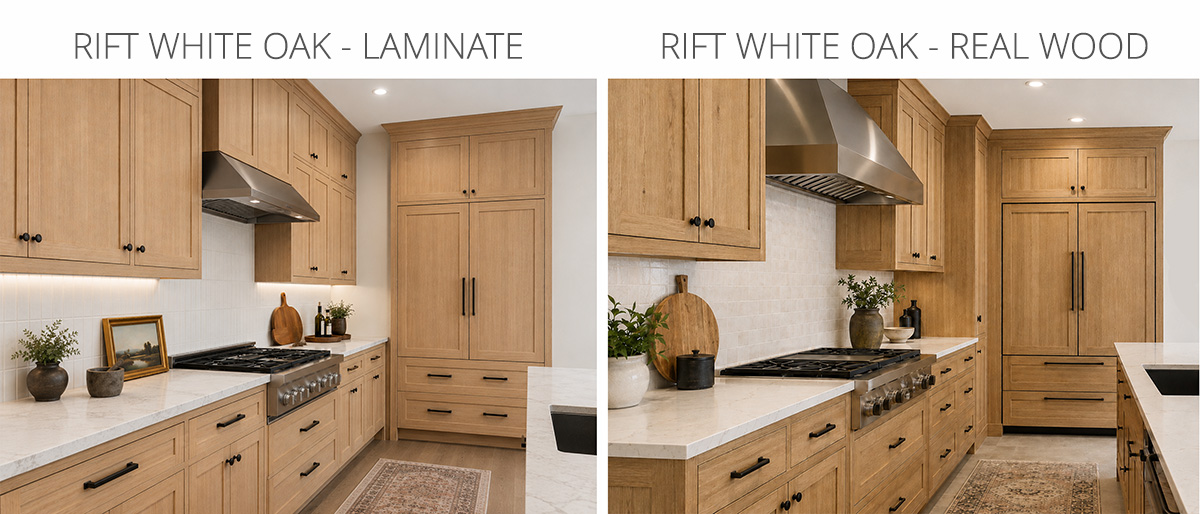
The Rift White Oak Misconception
Rift white oak may be the most misunderstood version of white oak.
When people hear “rift white oak,” they often think it means perfectly straight grain and perfectly even color. It does not.
Rift cutting does generally produce a straighter, more linear grain pattern compared to plain sawn white oak. That is why it is so popular in modern cabinetry. It can give a cleaner, quieter, more vertical look. But rift white oak is still real wood. It can have color variation. It can have darker and lighter boards. It can have mineral streaks. It can have grain that shifts. It can show natural character. It can accept stain differently from board to board. It can look warm in one area and cooler in another. It can look calm in one cabinet and more active in the next.
That is not the shop doing something wrong. That is not a supplier mistake. That is not “bad rift white oak.” That is rift white oak being rift white oak.
Anyone who has worked with it long enough has had the conversation: “The homeowner wanted natural white oak, but they expected it to look like the sample.”
And every experienced cabinetmaker, finisher, or remodeler just quietly nods, because we have all been there.
Samples Are Helpful, But They Are Not Promises
A sample door is a useful tool. It helps show the species, finish direction, sheen, construction, profile, and general design intent.
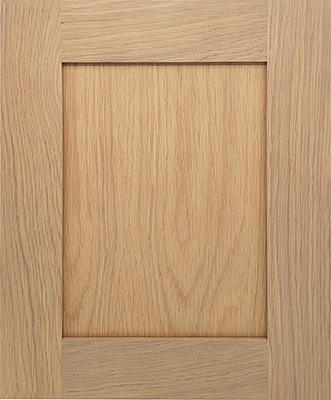
But a sample is not a guarantee that every door, drawer front, panel, filler, and finished end will look exactly like that one piece.
This is especially true with white oak.
A small sample may show one very clean board. A full kitchen may include dozens of boards. Once you spread that over doors, drawer fronts, panels, fillers, end panels, moulding, toe kick, and other parts, the natural range becomes more visible.
The bigger the project, the more natural variation you should expect.
This matters because homeowners often approve one small sample and then subconsciously expect the whole kitchen to match that sample like a paint chip. Real wood does not work that way. A paint chip represents a manufactured color. A wood sample represents a natural material.
That distinction can save a lot of pain.
The “Perfect Match” Expectation Is the Problem
One of the biggest myths in the market is that natural wood should match perfectly if the manufacturer or cabinet shop is “doing it right.”
That sounds reasonable to someone who has mostly seen printed materials.
But in the real world, perfect matching is not normal. It is not always possible. And when it is possible, it usually requires extensive sorting, waste, time, and cost.
A shop can make reasonable efforts to select and coordinate material. A good manufacturer should care about appearance. But there is a difference between thoughtful selection and pretending wood is plastic.
Real white oak may include:
- light and dark boards
- warm and cool tones
- straight and slightly shifting grain
- cathedral grain in plain sawn material
- ray fleck in quartersawn material
- mineral streaks
- natural board-to-board contrast
- different stain absorption
- different appearance depending on lighting
None of that means the material is wrong. It means the material is real.
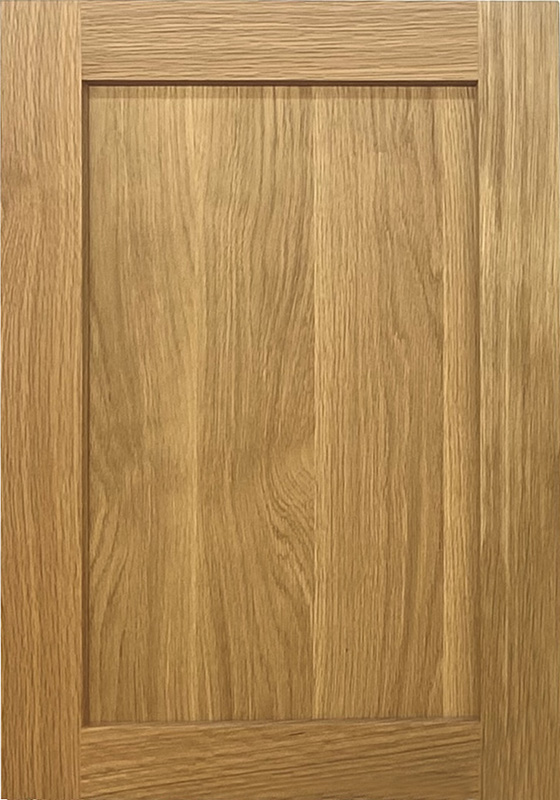 See examples of Real Wood White Oak Components
Why This Hurts Remodelers
This issue does not only affect the manufacturer. It puts remodelers in a tough spot.
The remodeler is often the person standing in the kitchen when the homeowner notices something unexpected. The remodeler may have ordered exactly what the homeowner requested. The shop may have built exactly what was ordered. The wood may be well within normal natural variation.
But the homeowner says, “Why doesn’t this match the picture?”Now the remodeler is stuck translating the difference between natural material and manufactured expectations after the job is already installed. That is a bad time to have the conversation.
The best time to talk about white oak variation is before the order is placed. The next best time is before the finish is approved. The worst time is after the doors are hanging and the homeowner has already decided something is wrong. This is why remodelers should educate homeowners early. Not because white oak is risky or bad, but because it is natural, and natural materials need natural expectations.
A simple conversation up front can prevent a very expensive and emotional conversation later.
The Laminate Look Has Changed Expectations
The cabinet and interior design world is full of wood-look products. Many of them are marketed with names like white oak, natural oak, rift oak, blonde oak, Scandinavian oak, or European oak.
Those products have trained people to believe that white oak means a very narrow visual range: soft beige, straight grain, no surprises, no contrast, no “busy” boards, no amber tones, no darker pieces, no natural movement.
- That look is not really white oak.
- It is an edited version of white oak.
- It is white oak after the natural variation has been filtered, flattened, repeated, and printed.
Again, that does not make laminate bad. It just makes it different.
The problem comes when homeowners expect real white oak to behave like a manufactured image of white oak. That expectation is not fair to the remodeler, the cabinetmaker, the finisher, or the wood itself.
Stain Does Not Eliminate Variation
Another common misconception is that stain will make white oak more uniform.
Sometimes stain can help blend the range. Sometimes it can reduce contrast. Sometimes it can move the color closer to the design goal. But stain does not erase the nature of the wood.
Different boards absorb stain differently. Grain density, pore structure, sanding, cut, and board color all affect the finished result. A stain that looks perfect on one board may look darker, lighter, warmer, or cooler on another.
This is why stained white oak can be both beautiful and challenging. It can produce depth, richness, and character that manufactured materials cannot match. But it will not create the uniformity of a printed surface.
If the goal is perfect sameness, real wood may not be the right material.
If the goal is warmth, depth, authenticity, and natural beauty, white oak is hard to beat.
Natural Variation Is Not a Defect
This may be the most important point. Natural variation is not a defect. It is part of the value of real wood.
The very thing that makes white oak difficult to control is also what makes it beautiful. It has depth. It has movement. It has life. It does not look like a repeated pattern because it is not a repeated pattern. A real white oak kitchen should not look like every piece was printed from the same image. It should look coordinated, intentional, and well made — but still natural.
There is a difference between bad workmanship and natural variation. There is a difference between poor material selection and real wood character. There is a difference between a manufacturing defect and a homeowner expectation formed by laminate samples.
Those differences matter.
A Practical Way to Set Expectations
For remodelers, designers, and cabinet professionals, the goal is not to scare homeowners away from white oak. The goal is to help them love it correctly.
Here are a few helpful ways to frame the conversation:
“White oak is a natural product, so the full job will have more variation than a small sample.”
“Rift white oak gives a straighter grain look, but it does not mean every piece will be the same color.”
“Laminate and printed wood-look products are designed for consistency. Real wood is chosen for natural beauty.”
“Stain can influence the color, but it will not make every board identical.”
“If you want the warmth and authenticity of real wood, some variation is part of the look.”
“If you want perfect uniformity, a manufactured material may be a better fit.”
Those conversations may feel basic to someone who works with wood every day. But to a homeowner doing their first white oak kitchen, they can be extremely helpful.
They can be the difference between delight and disappointment.
Why Real White Oak Is Worth It
With all of that said, white oak remains popular for a reason. It is beautiful.
It can be clean and modern. It can be warm and traditional. It can be rustic, refined, casual, or high-end depending on the cut, design, and finish. Rift white oak in particular can create a calm, tailored look that works extremely well in today’s cabinetry styles. Real white oak has something laminate cannot fully duplicate: depth.
Light moves differently across real wood. Grain changes from piece to piece. The surface has a richness that comes from actual material, not a printed image. A real wood kitchen feels different because it is different.
The variation is not the enemy of the design. Handled correctly, the variation is what makes the design feel alive.
Final Thought: Choose Real Wood With Real Expectations
- White oak is not laminate. Rift white oak is not a computer rendering. A sample door is not a promise that a tree will stop being a tree.
- Real wood is beautiful because it is real. It carries the marks of natural growth, natural color, natural grain, and natural variation.
- For homeowners, the best advice is simple: learn what real white oak is before you order it.
- For remodelers, the best advice is even simpler: have this conversation early.