
How Humidity Impacts Cabinet Doors
and What Contractors Can Do About It
Summer is on the way—and with it comes the kind of humidity that makes job sites uncomfortable and materials unpredictable. While you’re working to keep crews cool and projects on track, your cabinetry is quietly responding to that moisture in the air.
Wood is a living material. It constantly adapts to its environment, expanding and contracting as humidity levels rise and fall. For remodeling contractors, understanding how this movement affects cabinet doors is critical to preventing callbacks and ensuring long-term performance.
What Humidity Does to Wood Cabinet Doors
Swelling, Warping, and Movement
In high-humidity conditions, wood absorbs moisture from the air. This causes cabinet doors to expand in width and thickness (though not length). The result?
- Doors that stick or bind
- Uneven moisture absorption leading to warping, cupping, or twisting
- Doors that appear crooked or won’t close properly
This is especially common with solid wood doors, which are more reactive to environmental changes than engineered materials.
The Impact on Painted and Finished Doors
Humidity doesn’t just affect structure—it impacts finish quality too.
- Painted doors may develop hairline cracks at joints over time due to repeated expansion and contraction.
- Stained or clear-coated doors can also show signs of stress if seasonal movement isn’t controlled.
That’s why thoughtful construction matters. At Keystone Wood Specialties are mitered door joints are built with a small interior gap to allow for natural expansion—reducing the risk of visible cracking.
Prevention: Controlling the Environment
The most effective way to limit wood movement is climate control.
Here’s what to recommend to your clients (and implement on jobs where possible):
- Maintain consistent indoor humidity levels
- Use dehumidifiers in damp spaces (basements, coastal homes, etc.)
- Run air conditioning, which naturally removes excess moisture
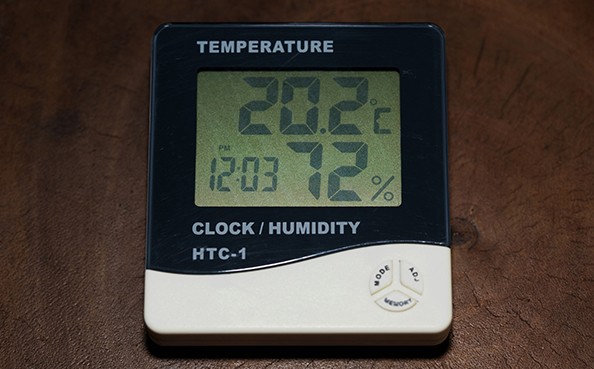
- Install a hygrometer to monitor humidity (ideal range: ~35–55%)
Consistency is key. Rapid or frequent swings in humidity are what cause the most stress on cabinetry.
Material Choices Matter
Not all cabinet materials respond the same way to humidity.
For better stability, consider:
- Plywood
- Veneered MDF
- Superior Green Panels (MDF)
These materials are significantly more stable than solid wood and resist expansion and contraction, making them ideal for:
- Painted doors
- Slab drawer fronts
- High-humidity environments
Best Practices for Unfinished Doors
If you’re ordering unfinished cabinet doors:
- Finish them immediately upon delivery
- Unfinished wood will quickly absorb ambient moisture, increasing the risk of movement before installation
Also note: wider components (like slab drawer fronts) will show movement more noticeably than narrower parts.
Plan for Movement—Don’t Fight It
The good news? Wood movement isn’t random—it’s predictable.
By understanding how different species respond to moisture, you can:
- Anticipate expansion and contraction ranges
- Make smarter material and design choices
- Reduce long-term issues like warping and finish failure
Using expansion charts and planning for seasonal changes gives you more control over the final outcome—and fewer surprises down the road.
Bottom Line
Humidity is unavoidable—but problems from it aren’t.
By combining:
- Smart material selection
- Proper finishing practices
- Environmental control
- And informed design decisions
—you can deliver cabinetry that performs reliably year-round, even in the most humid conditions.